The Social Security Trust Fund


People talk about the Social Security Trust Fund as if it is a big pile of cash that has been built up over time and can be used to pay beneficiaries. The Trust Fund has been managed by the U.S. Department of Treasury since 1937. In 1957 they earmarked some of the funds for the Disability Insurance (DI) portion of the program.
When payroll taxes (income) exceed benefits paid out that year, the money is sent to the Trust Fund where it is used by buy U.S. Treasury Securities, which pay interest set by statute. Note that this interest rate has varied over the years and the 10-year average ranges between 4.8% and 5.8%. When payroll taxes fall short of the benefits needed, the SSA redeems the held Treasury Securities to get the cash needed to pay beneficiaries. Note that if the Treasury is short on cash, government has to raise taxes, borrow from the public, enact spending cuts, or print money.
The Treasury, having issued a time-based security to the Social Security Administration, then spends the money in the current year. Essentially, all current 'excess' in the Trust Fund is in the form of Treasury IOUs.
Let's examine the following chart. The green line is Trust Fund reserves and the red line is benefits paid out. As you can see, we are on a massive collision course as these two lines are bound to intersect in the near future.
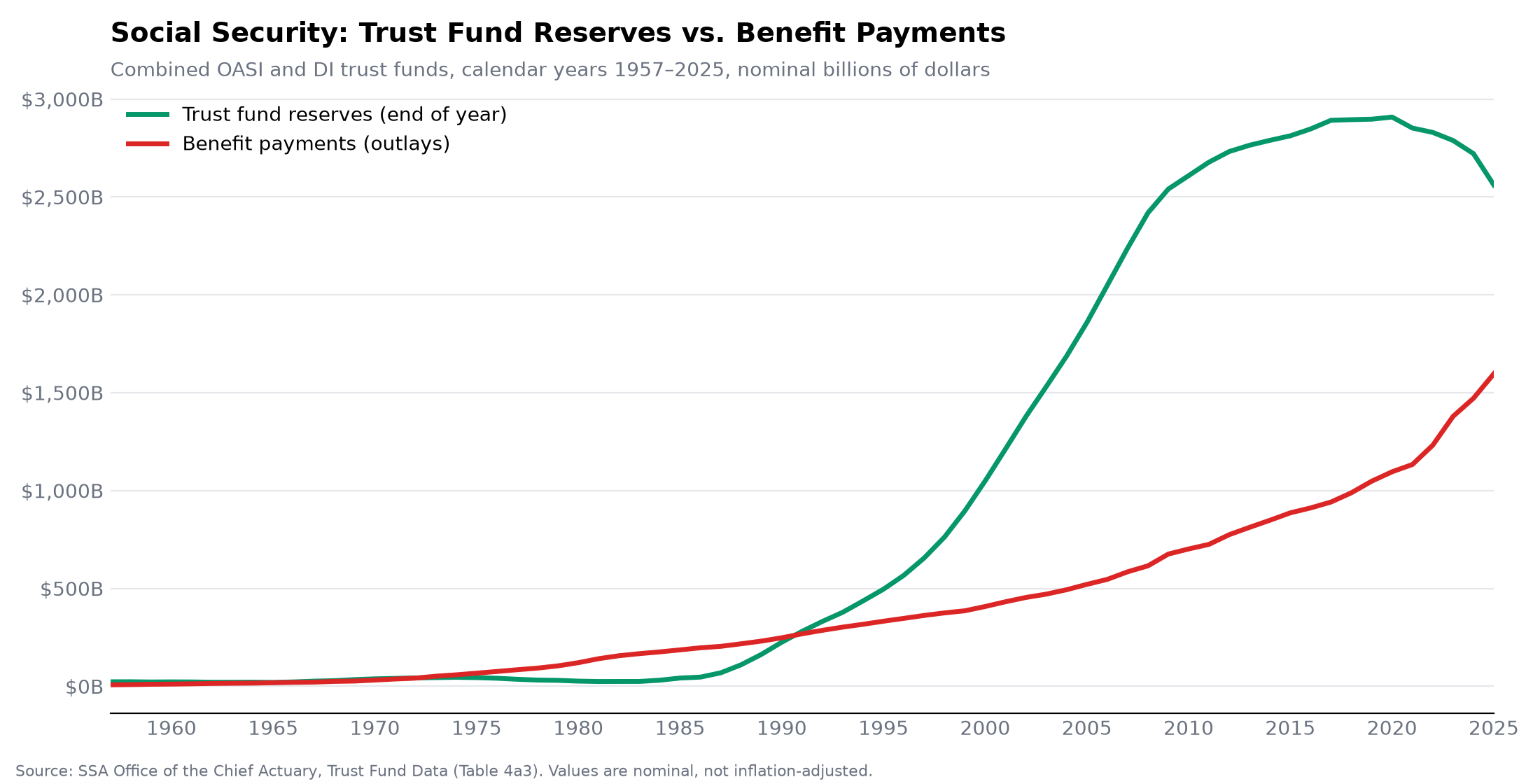
When these lines intersect, the U.S. Treasury has some interesting choices to make:
- Dramatically increase payroll taxes to ensure promised benefits are paid.
- Decrease the benefit payment that have been promised to workers who paid into the system.
- Print a lot of money to cover the difference.
We'll examine the impact of each of these choices in future posts.