Social Security - The Origin
The Great Depression impacted millions of Americans in 1929. During that time, there were many populist movements that shared a common goal of providing government funding to aged persons.

The Great Depression impacted millions of Americans in 1929. During that time, there were many populist movements that shared a common goal of providing government funding to aged persons. From Huey Long’s “Every Man a King” movement, to the Townsend Old Age Revolving Pension Plan, to the Fire and Brimstone teaching of Fr. Charles E. Coughlin; calls for retirement assistance were heard throughout the nation.
When President Franklin D. Roosevelt took office in 1932, the concept of ‘social insurance’ as an alternative to welfare assistance was beginning to become popular. Roosevelt pitched an idea of social insurance as a means in which workers provided for their own future security through payroll taxes. This wasn’t viewed as welfare, but as prudent, common sense.
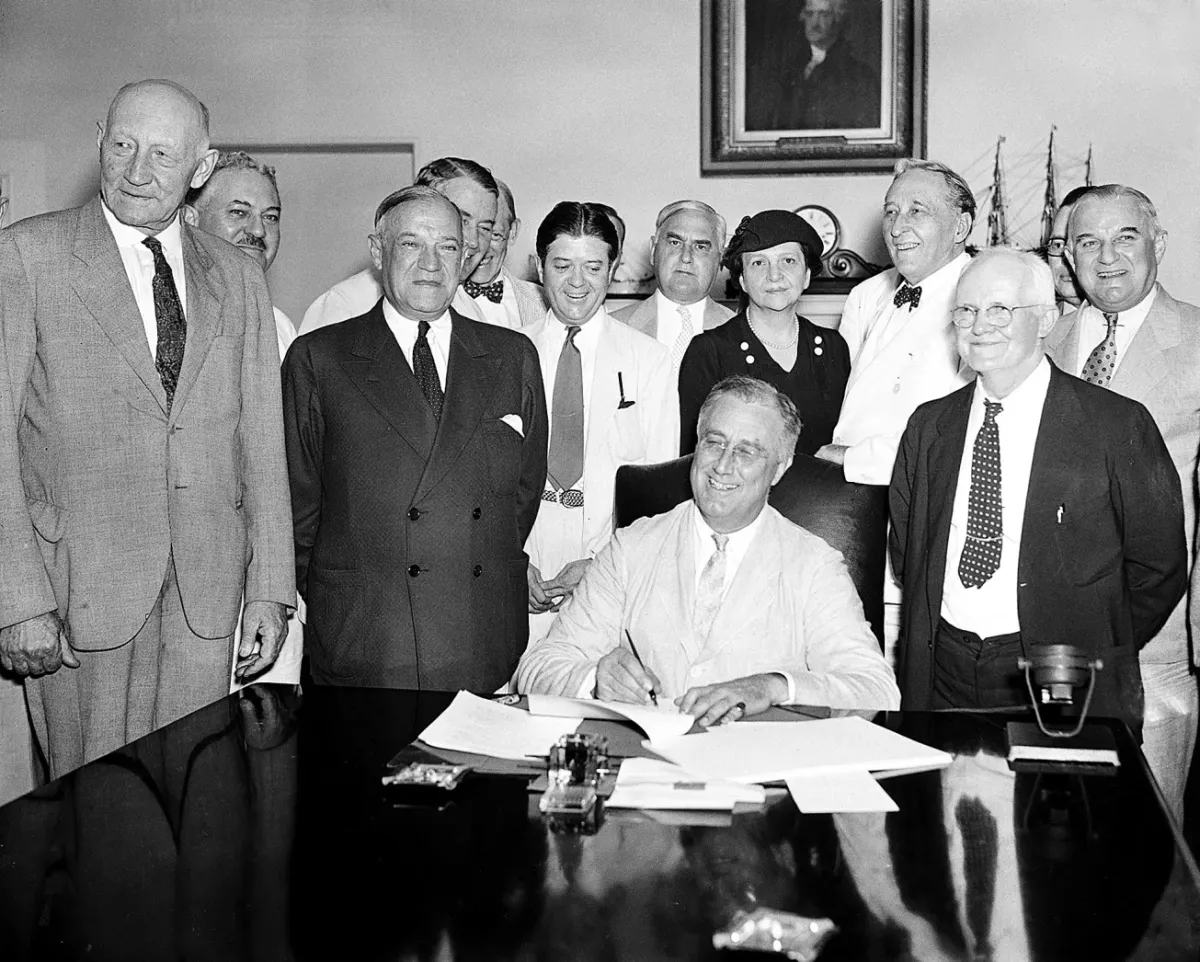
In his June 1934 address to Congress, Roosevelt announced his intention to create the Social Security program. He informed Congress that he would establish a committee of make recommendations to Congress. Their report was completed and provided to the House and the Senate in January of 1935. It was passed by both houses and signed into law by President Roosevelt on August 14, 1935.
The title of the bill read:
“An act to provide for the general welfare by establishing a system of Federal old-age benefits, and by enabling the several States to make more adequate provision for aged persons, blind persons, dependent and crippled children, maternal and child welfare, public health, and the administration of their unemployment-compensations laws; to establish a Social Security Board; to raise revenue, and for other purposes.”
The title of the bill tells us that first and foremost, Social Security is a welfare program, not a retirement program. From its inception it was used to provide welfare for people who were sick, blind, disabled, or otherwise unable to work. It also provides for child welfare and public health.
Initially, the Social Security law only provided retirement benefits for workers, not their spouses or children. It was taxed at 1% from the employee and 1% from the employer on the first $3,000 of income; with a maximum revenue of $60 to the program from each worker. (Note: Adjusted for inflation, that would be $1,485 from each worker; half from their paycheck, and another half from their employer.)